
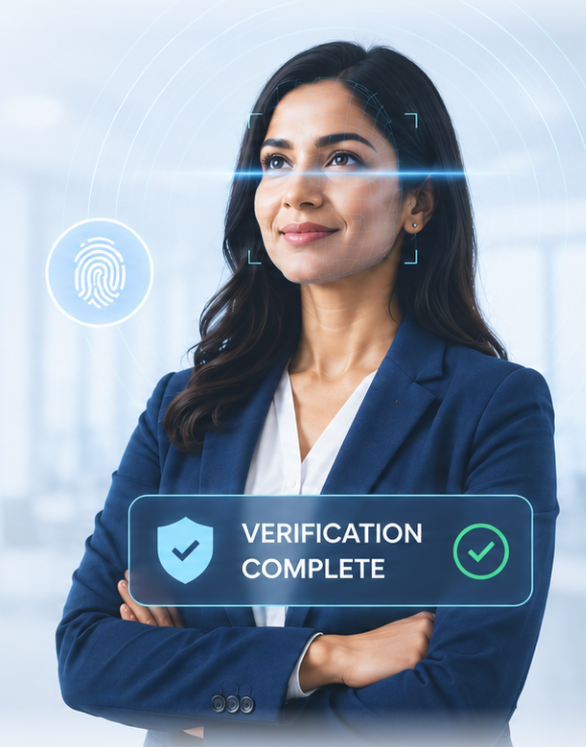
Certified Liveness Detection and Voice Biometrics Authentication for Secure Identity Verification
- Technology
- Shakir 252
- 2026-10-01 15:17:54
- 566276
As digital transactions continue to grow, businesses need reliable methods to verify user identities and prevent identity fraud. Certified liveness detection and voice biometrics authentication are advanced security technologies that help organizations strengthen digital identity verification, protect sensitive information, and deliver secure user experiences. By combining facial liveness analysis with voice-based identity verification, businesses can introduce additional layers of protection across digital platforms.
Understanding Certified Liveness Detection
Certified liveness detection is a technology designed to determine whether a biometric sample comes from a real, present person rather than a photograph, prerecorded video, mask, or other artificial representation. It plays an important role in digital onboarding, financial services, remote customer verification, and access control.
Modern liveness detection systems analyze facial characteristics, movements, and other relevant signals to identify potential spoofing attempts. Depending on the solution, verification may involve passive checks that work in the background or active checks that require a user to perform a specific action.
Organizations should evaluate whether a liveness detection solution has been independently tested or certified against relevant standards. Certification claims should be verified for the specific product, version, and testing scope. This helps businesses assess the technology's reliability and suitability for their security requirements.
What Is Voice Biometrics Authentication?
Voice biometrics authentication verifies a person's identity by analyzing distinctive characteristics of their voice. These characteristics can include vocal patterns, pronunciation, rhythm, and other acoustic features used to create and compare voice representations.
Unlike traditional passwords or PINs, voice biometrics can support identity verification through natural speech. This makes it useful for contact centers, mobile applications, digital banking, customer support, and remote authentication workflows.
Advanced voice verification systems can compare a live voice sample with an enrolled voice profile to determine whether the sample matches the expected speaker. However, organizations must also consider recorded audio, synthetic speech, and AI-generated voice attacks when designing their authentication processes.
Benefits of Combining Liveness Detection and Voice Biometrics
Integrating certified liveness detection with voice biometrics authentication can create a more comprehensive identity verification process. Facial liveness checks help establish whether a real person is present, while voice biometrics provides another method of verifying identity.
Key benefits include:
- Enhanced fraud prevention: Multiple verification methods can make common impersonation attempts more difficult.
- Improved digital onboarding: Businesses can verify customers remotely without relying entirely on manual checks.
- Convenient authentication: Voice-based verification can reduce dependence on repeated password entry.
- Stronger access control: Organizations can introduce additional identity checks for sensitive accounts and transactions.
- Scalable verification: Automated biometric workflows can support growing volumes of digital users.
The effectiveness of these benefits depends on implementation quality, security testing, and the ability to detect evolving spoofing techniques.
Applications Across Industries
Financial institutions can use biometric verification to support secure account opening and customer authentication. Healthcare providers can explore these technologies to protect access to digital patient services, while enterprises can strengthen employee access controls. Digital platforms can also incorporate biometric checks into remote identity verification and fraud prevention workflows.
Responsible implementation should include encryption, informed consent, appropriate data retention policies, accessibility considerations, and alternative verification methods for users who cannot complete biometric checks.
Conclusion
Certified liveness detection and voice biometrics authentication are valuable technologies for organizations seeking stronger digital identity security. When implemented together with appropriate anti-spoofing controls and privacy safeguards, they can help businesses reduce identity-related risks while maintaining convenient verification experiences. Selecting solutions with transparent testing evidence, robust security capabilities, and responsible biometric data handling is essential for building trustworthy digital authentication systems.
627 people like this















About Premium Author
This post has been authored and published by one of our premium contributors, who are experts in their fields. They bring high-quality, well-researched content that adds significant value to our platform.