
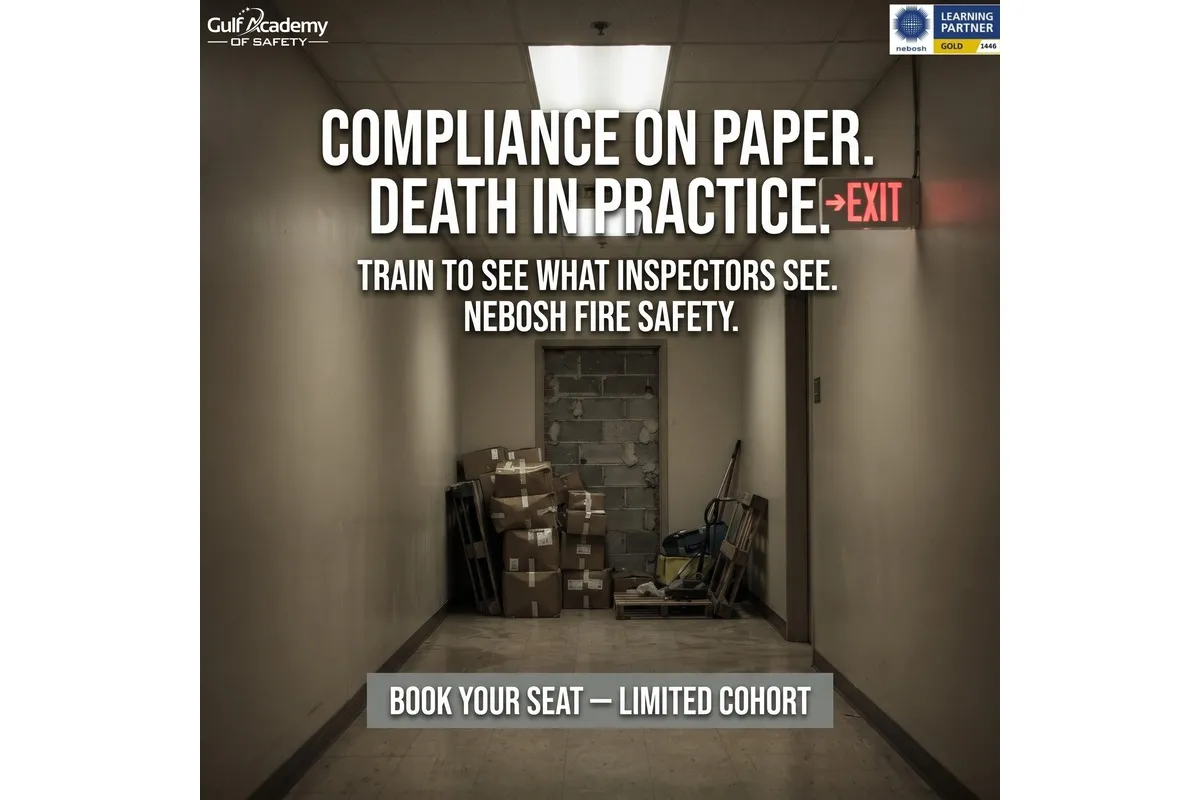
Fire and Safety NEBOSH: Careers, Pay and Where to Go Next
- Education
- gulf academysafety7
- 2026-11-05 14:23:56
- 566566
A qualification is only as useful as the doors it opens. So before spending time and money, it is fair to ask what Fire and Safety NEBOSH training can actually do for your career. This article looks at the roles, the pay ranges, and the paths that follow the NEBOSH Fire Certificate.
Why employers ask for it
Fire risk assessment is a specialist skill. Organisations are expected to manage fire risk responsibly, and many cannot do it without a competent person. That person is easier to find, and easier to trust, when they hold a recognised qualification.
Gulf Academy Safety notes that employers actively look for the NEBOSH Fire Certificate for roles that involve fire risk assessment. It is a Level 3 qualification, regulated and externally assessed, which gives hiring managers confidence in what it represents.
Roles you can aim for
Gulf Academy Safety lists several job paths open to holders of the NEBOSH Fire Safety Certificate. The salary figures it quotes are UK ranges, so treat them as indicative and check local markets if you work elsewhere.
| Role | Indicative UK salary |
| Fire safety risk assessor / consultant | £50,000–£60,000 (London); £28,500–£40,000+ (regional) |
| Fire safety technical manager | £45,000–£50,000+ |
| Fire safety advisor / officer | Up to £44,000 |
| Fire safety manager | £50,000–£60,000 |
| SHEQ / safety manager (with fire focus) | £35,000–£40,000 |
Two points are worth noticing. First, pay rises with responsibility, so moving from officer to manager usually needs more than the certificate alone. Second, location matters. London figures are noticeably higher than regional ones, and your own market may look different.
What each role looks like day to day
Fire safety risk assessor or consultant. You visit sites, assess fire hazards, and write up findings with recommendations. This role puts the practical unit of the course to direct use.
Fire safety advisor or officer. You support an organisation internally, helping maintain fire plans, run drills, check equipment, and train staff.
Fire safety manager. You lead the fire safety function, set policy, oversee risk assessments, and report to senior management.
Technical manager. You guide standards and technical decisions, often reviewing assessments and advising on design or compliance.
SHEQ or safety manager with a fire focus. You carry broader safety responsibility but bring particular depth in fire.
Who benefits most?
Gulf Academy Safety points to fire marshals and wardens who want to formalise their knowledge, facilities managers and health and safety representatives, supervisors and managers with legal responsibility, and career changers with no previous safety experience. Because there are no formal entry requirements, the course is open to people from many backgrounds, with a recommended English level of around IELTS 6.0.
How to make the certificate work harder
A qualification opens a door, but you still have to walk through it. A few habits help:
- Use your practical assessment as a portfolio piece. A well-done fire risk assessment shows what you can do.
- Keep learning. Fire regulations and guidance evolve, so stay informed.
- Build real experience. Volunteer for fire warden duties, drills, or audits at work.
- Network. Classmates and tutors can become referrals.
- Speak the language of risk. In interviews, explain how you would assess a site, not only what you studied.
Where to go next
The NEBOSH Certificate in Fire Safety is a launchpad. Common next steps include:
- NEBOSH General Certificate in Occupational Health and Safety, for broader safety responsibility across hazards beyond fire
- NEBOSH International Diploma, for people aiming at senior roles such as HSE manager
- Specialist pathways such as Process Safety Management, for high-hazard industries including oil, gas, and chemicals
Many professionals combine fire expertise with a broader safety qualification. That pairing makes them valuable in roles where fire is one of several risks they must manage.
What the course involves
To help you plan, here are the essentials. The qualification requires about 60 hours of study, including at least 28 taught hours. You can study in a classroom or virtually over about five days, or learn online at your own pace with access for up to a year. Assessment has two parts: a 24-hour scenario-based open book exam (FSC1) and a practical fire risk assessment (FSC2). Both are marked by external NEBOSH examiners, and certificates are typically issued within 40 working days of completing both.
Choosing where to study
Because the syllabus is the same everywhere, the right provider is the one that supports you best. Look for experienced tutors, help with the practical unit, and schedules that fit your life. Gulf Academy Safety describes itself as a NEBOSH Gold Learning Partner, with study options in classroom, online, and e-learning formats and offices across the UAE, Saudi Arabia, and India.
The bigger picture
Fire safety is one of those fields where the work matters quite literally. Every correctly maintained exit, every drill that goes smoothly, and every risk caught before it becomes an incident is the result of someone who knew what to look for. A recognised qualification will not make you that person overnight, but it gives you the framework and the credibility to become one.
If you have been wondering whether this is the right moment to specialise, consider what you gain by waiting. Roles will still be there next year, but so will the people who started earlier.
👉 Start your fire safety career with the NEBOSH Fire Certificate at Gulf Academy Safety and take a recognised step forward.
656 people like this













About Premium Author
This post has been authored and published by one of our premium contributors, who are experts in their fields. They bring high-quality, well-researched content that adds significant value to our platform.