
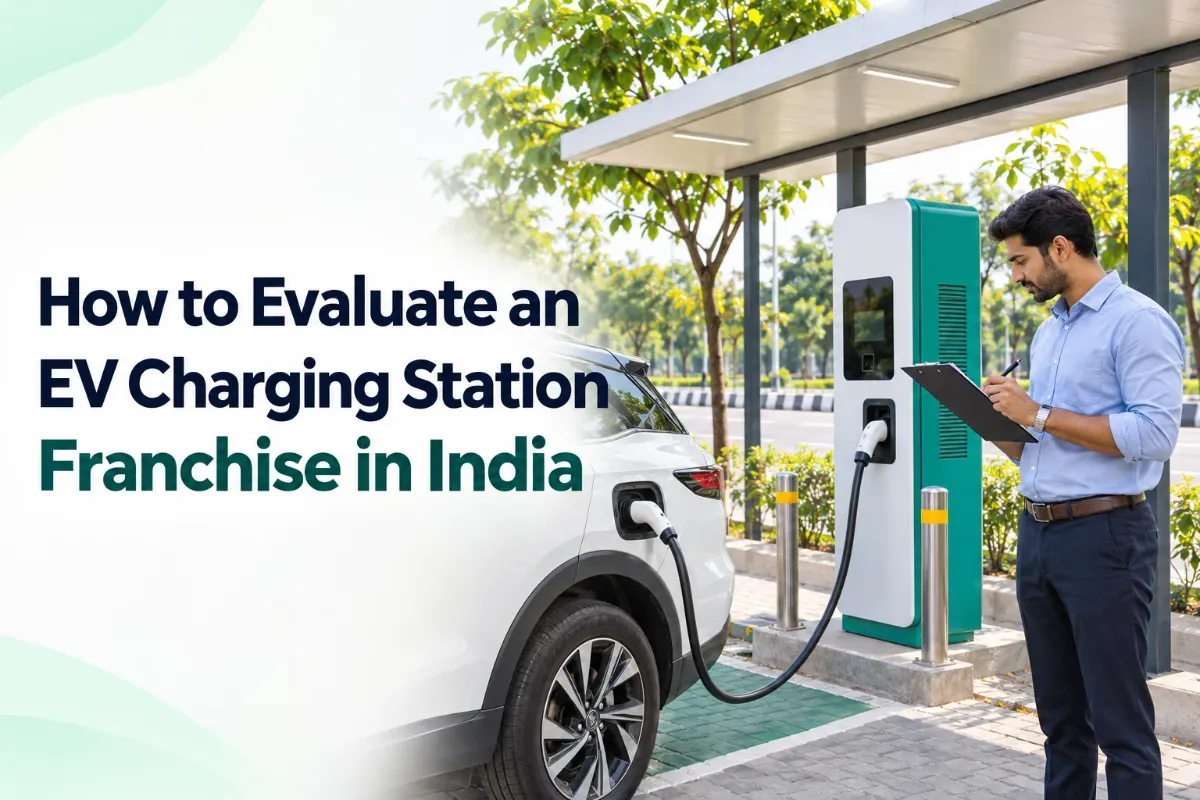
Evaluate an EV Charging Station Franchise in India
An EV charging station franchise is worth considering when the location can generate enough paid charging sessions to cover electricity, site expenses, maintenance, and the cost of the initial investment. Before signing, ask each operator for an itemised proposal, an example settlement statement and the assumptions behind its revenue estimate. A charger quotation tells you how much the equipment costs. A site-specific business case tells you how much you could spend to open, how cash may move once operations begin and who pays when something goes wrong.
What an EV Charging Station Franchise Quote Should Include
Ask each EV charging company in India on your shortlist to quote for the same location, charger configuration and operating hours. Compare a turnkey offer with an equipment-only offer by adding the work excluded from the latter. The cable route, for instance, may be much longer than assumed in a standard price list. The local electricity distribution company, or DISCOM, may also identify connection work that changes the budget.
One-time costs to include
List the charger, delivery, civil work, cables, protection equipment, bay marking, installation, testing and any franchise or onboarding fee. Identify who will pay for a new connection, meter, upgrade or property restoration. Separate deposits that may be refundable from expenses that you will never recover. If the operator estimates any work, record the assumption and ask who absorbs the difference after the survey.
The Ministry of Power’s charging infrastructure guidelines describe the framework for installation and operations. Use the guidance and the applicable amendment when discussing your site with the DISCOM and project team. Confirm the electricity connection terms and tariff that apply to the actual property.
Costs that continue after commissioning
Build a monthly budget for rent or the value of the parking space, software, connectivity, preventive servicing and any fixed fees. Then list costs that change with usage, such as electricity, payment processing and a per-session operator fee. Ask whether support fees change after the first year. Keep cash aside for slow months, overdue settlements and repairs outside the warranty.
How to Test the Revenue Forecast
Start with completed sessions per day, average energy sold per session and days the site is open. Ask the operator where those assumptions came from. A busy shopping centre is a weak comparison for an office site with a locked evening gate. A nearby station with similar hours and vehicle traffic gives you a closer benchmark. When possible, talk to a current host and check whether seasonal changes or new competition affected usage.
Consider an illustrative site with six completed sessions per day, 18 kWh delivered per session and 30 operating days. That gives 3,240 kWh sold per month. Suppose ₹4 remains per delivered kWh after electricity, losses and variable fees. The site contributes ₹12,960 before fixed costs. If fixed monthly costs are ₹20,000, the operating shortfall is ₹7,040 before financing, tax or recovery of the initial investment. At the same assumed margin, it takes 5,000 kWh a month to cover fixed operating costs alone. These figures are planning assumptions and do not represent market rates or any operator’s results.
Put downtime and a slow start in the model
Run three cases using the same cost assumptions. For the cautious case, reduce completed sessions and allow for outages or inaccessible parking bays. For the middle case, use demand you can explain from local observations or prospective customers. For the higher case, identify what has to happen for those sessions to materialise, such as a fleet contract. Check the cash position in each case. Also ask how results change if an operator fee rises while the customer price holds steady.
Check how many sessions the site can actually serve
Translate your sales target into occupied bay time. If your break-even estimate requires roughly ten sessions a day, ask when those sessions are likely to happen. A single bay that looks adequate across twelve operating hours could face queues when most arrivals fall inside the evening peak. Include the time drivers spend parking, starting the session and freeing the bay. This check helps explain whether the forecast needs more equipment, longer opening hours or a lower estimate of completed sessions.
Compare Support and the Franchise Agreement
Ask the shortlist, including EarthtronEV if it fits your location, for a sample settlement report and a written breakdown of operator and host responsibilities.
Review who controls the retail charging price, who funds discounts, when payouts are due and how failed sessions or refunds affect them. A quoted share of sales can have a different value depending on which fees and taxes are deducted before you get paid. Ask the operator to walk you through one paid session and one refund using the draft contract and the sample report.
Check what support covers after the charger goes live. Ask who answers driver calls, who can restart a unit remotely and which service team would visit your address. Compare the expected response time with the expected restoration time. If a part has to come from another city, ask what happens in the meantime and whether the agreement gives the host any remedy for extended downtime.
Read the exit terms before paying a deposit. Record who owns the equipment, who may move it, what data you can export and who pays to restore the bay. Check the renewal terms and whether an exclusivity clause restricts additional chargers at the property. If the agreement depends on a power connection or landlord consent, ask how the documents handle delays and what money is recoverable.
Frequently Asked Questions
What if I already own the land?
Include the value of the parking bays in your comparison. You may be giving up regular parking revenue, tenant space or another use for the property. Your cash model and your site decision answer different questions.
Is revenue share calculated on every rupee the driver pays?
The contract defines the base. Ask for the treatment of applicable taxes, refunds, parking fees and promotional credits, then reconcile a sample driver invoice with the host payout.
Can I open with one charger and add another later?
Ask the installation team to price both the initial build and the incremental expansion. Reserve room for future bays and confirm whether the proposed electrical connection can support them.
Should I speak to an existing franchise host?
Yes. Ask a host at a comparable location what changed after launch, how often the station needed service and whether the settlement report matches what the host expected.
What should trigger a pause before paying an advance?
Pause if the proposal leaves the power connection, the party responsible for major upgrades or the refund terms unclear. Ask for a revised quotation or a written condition tied to those approvals.
Make the Decision From the Site Numbers
Put all offers on one page using the same monthly energy, hours and cost assumptions. Attach the survey, the settlement example and the contract terms to your preferred offer. If the site cannot cover its fixed costs in a realistic case, explore a smaller installation or a different location before committing to the full project.
660 people like this











About Premium Author
This post has been authored and published by one of our premium contributors, who are experts in their fields. They bring high-quality, well-researched content that adds significant value to our platform.