
Money Laundering: Examples, Warning Signs, and AML Screening
- Technology
- Robinson Brown
- 2026-04-30 16:12:16
- 565876
Illegal money can appear totally legitimate through money laundering. A crime can be committed using a business, transferring money to and from accounts, or buying assets that obscure the source of the money. The activity may appear normal if individual transactions are examined separately. This is usually the case in the broader context. This is crucial for banks, fintechs, and other businesses to understand in order to be effective in their AML compliance efforts. Understanding money laundering, the red flags to look out for, and the role of screening in detection can enable compliance teams to catch risks sooner.
What Is Money Laundering With Example?
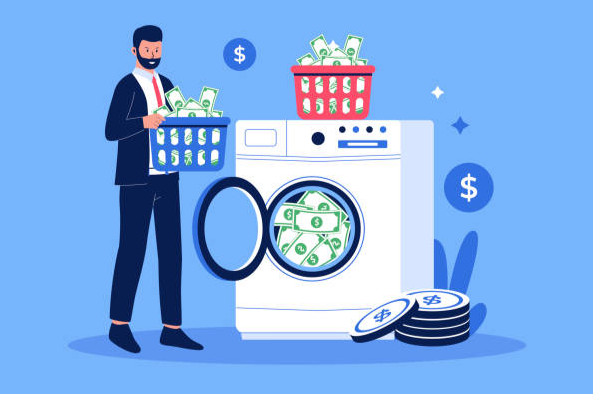
Money laundering is the act of concealing the criminal source of money and obscuring its true nature. The original money can be the proceeds from fraud, corruption, drug trafficking, theft, or other crime. A basic money laundering example is a person using an illegal source of money to fund a seemingly legitimate business. Understanding what is money laundering with example makes this complex crime easier to understand. For instance, if a restaurant has a greater number of cash sales than it actually receives, what would be the effect? The money is then commingled with legitimate money and placed in the business bank account. Now it seems the funds are from regular business transactions. This makes it more difficult to trace the money back to the source. In real-life cases, the situation can be more complex. A criminal can involve multiple businesses, accounts, assets, and countries to make the financial trail more difficult to trace.
How Does Money Laundering Usually Work?
Typically, money laundering involves passing illegal money through a series of transactions until its origin becomes obscure. It may include cash deposits, business deals, property transactions, investments, transfers between accounts, and other financial transactions. People or companies may also be used to put a distance between criminals and the money. For instance, money can flow into a business account first. They can then transfer it to another company under a different name, prior to the asset being acquired. Every transaction might look like a normal one in isolation. The concern becomes clearer when the transactions are viewed together. That is why financial institutions and other regulated businesses examine transactions instead of just one payment.
How Do Illicit Funds Move Through the Financial System?
The movement of illegal funds is often explained through three commonly recognised stages: placement, layering, and integration. These stages show how criminals attempt to introduce illicit money into the financial system, make its origin harder to trace, and eventually give it a legitimate appearance.
Placement is where illegal funds first enter the financial system. This may happen through cash deposits, purchases, or businesses that handle large amounts of money. At this point, unusual activity can attract attention because the funds are closest to their original source.
Layering involves creating more distance from that source. Funds may pass through multiple accounts, companies, assets, or jurisdictions. The purpose is to make the financial trail harder to understand.
Integration is the point where the funds appear to have a legitimate origin. They may return through business income, investments, property transactions, or other apparently lawful activities.
These stages of money laundering do not always happen in a fixed order. Some money laundering schemes use only certain elements or combine several methods. Understanding the general process still helps compliance teams recognise unusual financial patterns and investigate activity that does not fit the customer's profile.
What Can Make a Transaction Look Suspicious?
A suspicious transaction does not necessarily constitute an obvious illegal payment. Sometimes it is caused by a sudden change in the normal behaviour of customers. A customer who is used to making small local transactions may suddenly start making several large international payments. A company with a small amount of business activity can also start to be receiving big cash payments from unrelated third parties. Other red flags may be complex ownership, payments for activity in high-risk jurisdictions, a high number of transactions, unexplained transfers, or payments in a manner that is not consistent with the customer's known business profile. A single transaction is no evidence of money laundering; there may be a legitimate reason behind it. The key is whether the activity seems compelling based on the profile and previous activities of the customer. That is where effective AML controls come into play. They provide compliance teams with data to investigate strange activity rather than make assumptions.
Making AML Screening More Effective With the Right Technology
Manual screening becomes difficult when businesses manage large customer databases. Compliance teams may need to check several sources, compare potential matches, and monitor changes over time. The workload becomes even heavier when false positives create unnecessary alerts. Technology can make this process more manageable. AML Watcher supports AML compliance through screening technology covering sanctions, PEPs, and adverse media. These checks help compliance teams identify relevant risk signals and investigate potential concerns more efficiently. Screening works best as part of a wider AML program. Customer due diligence, transaction monitoring, enhanced due diligence, and ongoing monitoring all contribute to a stronger approach. The goal is not to create more alerts. It is to identify meaningful risks and give compliance teams better information for investigation. Make AML screening more efficient with AML Watcher and strengthen the process for identifying and managing potential financial crime risks.
587 people like this


















About Premium Author
This post has been authored and published by one of our premium contributors, who are experts in their fields. They bring high-quality, well-researched content that adds significant value to our platform.