
Longevity Trends in India 2026: 5 Key Healthspan Insights You Must Know
- Health
- auto immunitycare
- 2026-03-23 09:25:52
- 565616
The conversation around aging in India is undergoing a massive and necessary transformation in 2026.
People are no longer satisfied with simply adding a few extra years to the end of their lifespan through medical intervention.
The new, overwhelming focus is entirely on "healthspan" the number of years a person can live with vitality, mobility, and absolute cognitive clarity.
The Indian wellness market, now projected to surpass $250 billion by the early 2030s, directly reflects this cultural shift.
Consumers are actively moving away from reactive disease management and heavily investing in proactive, preventative care.
Rising disposable incomes and a growing awareness of global health science have created a new demographic of health-conscious Indians.
They are effectively blending modern medical technology with traditional Indian wisdom to redefine what it means to grow older.
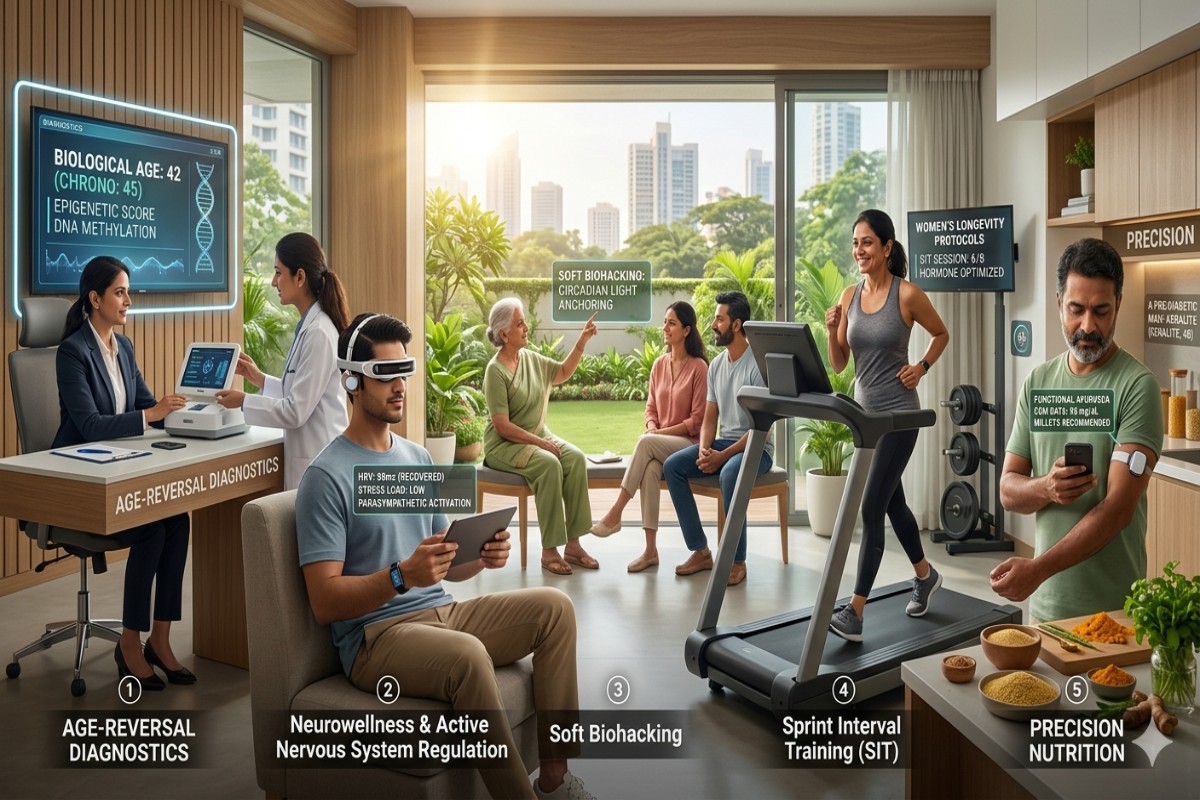
Here is a detailed breakdown of the five major longevity trends reshaping health, wellness, and medical paradigms across India in 2026.
1. Biological Age as the New Vital Sign
For decades, the standard measure of health in India relied on highly basic metrics like lipid profiles and fasting blood sugar.
In 2026, the absolute primary metric for longevity is "biological age," which measures physical health at the deeply cellular level.
Unlike chronological age, which merely tracks the passage of time, biological age reveals how rapidly a person's cells are degrading or repairing.
Advanced diagnostic tools, such as DNA methylation tests and intracellular energy scoring, are becoming widely accessible in tier-1 Indian cities.
These tests evaluate the epigenetic markers on your DNA, showing the real-time impact of your lifestyle, diet, and environment.
Consider a highly stressed 45-year-old financial executive based in Mumbai who undergoes this cellular testing.
They might discover their biological age is actually 54 due to years of chronic stress, poor sleep hygiene, and heavy urban pollution.
This stark data serves as a critical, undeniable early warning system, prompting immediate and targeted lifestyle interventions.
For individuals looking to accurately measure and improve these cellular biomarkers, specialized functional medicine platforms like Wellfinity provide the comprehensive testing and personalized protocols required to reverse biological aging.
By continuously tracking biological age, individuals can see the measurable impact of their health routines, transforming abstract goals into concrete data.
2. Neurowellness and Active Nervous System Regulation
Chronic stress has long been recognized as a silent accelerator of aging, particularly within high-pressure Indian corporate environments.
However, 2026 marks a definitive shift from passive stress management to active "neurowellness" and intentional nervous system regulation.
This trend focuses on strict physiological interventions designed to pull the body out of a chronic, damaging "fight or flight" state.
We are currently seeing a powerful, highly effective convergence of ancient Indian wisdom and cutting-edge biometric technology.
Traditional practices like Pranayama (breathwork) and Yoga Nidra are now routinely paired with sophisticated wearable devices.
These modern wearables continuously track Heart Rate Variability (HRV), providing real-time feedback on nervous system recovery and daily stress loads.
A practical use case involves a software developer in Hyderabad utilizing a vagus nerve stimulation device alongside daily guided breathwork.
They can use their wearable data to measurably confirm that their cortisol levels have dropped and their nervous system has stabilized after a grueling project.
This data-driven approach removes all the guesswork from mental health, making emotional resilience a tangible, trackable metric.
It firmly establishes that mental fitness is just as quantifiable and essential as physical cardiovascular fitness for long-term healthspan.
3. The Backlash Against Extreme Optimization: "Soft" Biohacking
Over the past few years, the global biohacking movement heavily popularized extreme, often highly stressful physical interventions.
In 2026, there is a distinct, measurable backlash against this over-optimization within the Indian wellness community, giving rise to "soft" biohacking.
The focus has shifted sharply toward gentle, restorative practices that intimately support the body's natural circadian rhythms.
Instead of intense, daily ice baths that can severely spike stress hormones, experts are now emphasizing circadian light anchoring.
This practice involves getting direct, unfiltered sunlight exposure first thing in the morning and strictly limiting artificial blue light after sunset.
For the rapidly aging population in India, this simple behavioral shift drastically improves sleep architecture and nighttime cellular repair.
It achieves profound longevity benefits without the need for expensive equipment, unregulated supplements, or extreme physical discomfort.
Soft biohacking also includes the rising trend of building low-tech "sleep sanctuaries" and committing to strict evening down-regulation routines.
It proves that the most effective, sustainable longevity strategies are often the quietest, most foundational lifestyle habits.
4. Women-Specific Longevity Medicine
Historically, the vast majority of longevity data, clinical trials, and resulting health protocols were based entirely on male physiology.
In 2026, the medical and wellness industries are aggressively pivoting to create dedicated, scientifically backed longevity lanes specifically for women.
This involves recognizing the fundamental biological reality that women age differently and require tailored interventions at every single decade of life.
The medical conversation has expanded far beyond basic, generalized menopause symptom management.
Clinics are now directly addressing ovarian aging and its massive, systemic impact on a woman's overall cardiovascular and cognitive healthspan.
For example, a 50-year-old Indian woman might now be prescribed Sprint Interval Training (SIT) instead of prolonged, exhausting high-intensity workouts.
These shorter, targeted bursts of exercise protect against muscle loss without severely disrupting delicate female hormone balances.
Nutritional and fitness protocols are also shifting to heavily prioritize weight training and daily protein optimization.
This is specifically designed to combat the rapid, dangerous bone density loss that is highly prevalent in post-menopausal Indian women.
By strictly addressing these unique hormonal and metabolic shifts, targeted protocols ensure a much higher quality of life and physical independence.
5. Functional Ayurveda and AI-Driven Precision Nutrition
India is currently witnessing a massive, culturally significant return to traditional ancestral diets, but with a highly modern, clinical upgrade.
"Functional Ayurveda" takes time-tested regional foods and herbal remedies and applies strict scientific rigor to their daily consumption.
The primary focus is on maximizing nutrient bioavailability and actively combating systemic cellular inflammation, the root cause of most age-related diseases.
Instead of prescribing generic diet plans, clinical nutrition is becoming hyper-personalized using Artificial Intelligence and continuous glucose monitors (CGMs).
Consider a pre-diabetic patient in Kerala who uses a CGM to monitor their daily meals and metabolic responses over several weeks.
They might discover that consuming traditional white rice severely spikes their blood sugar, causing internal inflammatory damage.
The AI-driven data then prompts a calculated switch to specific indigenous Indian millets that perfectly stabilize their unique metabolic response.
Similarly, traditional anti-inflammatory staples like turmeric or ashwagandha are being chemically formulated into highly bioavailable supplements.
This ensures maximum cellular absorption, moving these herbs from simple culinary additions to potent, clinical-grade longevity tools.
This trend deeply respects India's rich culinary heritage while actively utilizing modern technology to optimize it for a longer, healthier life.
Conclusion
By embracing these five major longevity trends, the Indian populace can completely redefine what it means to age in the modern era.
The ultimate goal for 2026 and beyond is not merely surviving into old age, but thriving with the energy and capability of youth.
From cellular testing and soft biohacking to precision nutrition and gender-specific care, the tools for a longer healthspan are finally here.
This proactive approach ensures that the later decades of life are filled with opportunity and independence, rather than physical limitation.
Aging is no longer an inevitable decline; it is a highly manageable biological process that we now have the power to optimize.
561 people like this
















About Premium Author
This post has been authored and published by one of our premium contributors, who are experts in their fields. They bring high-quality, well-researched content that adds significant value to our platform.