
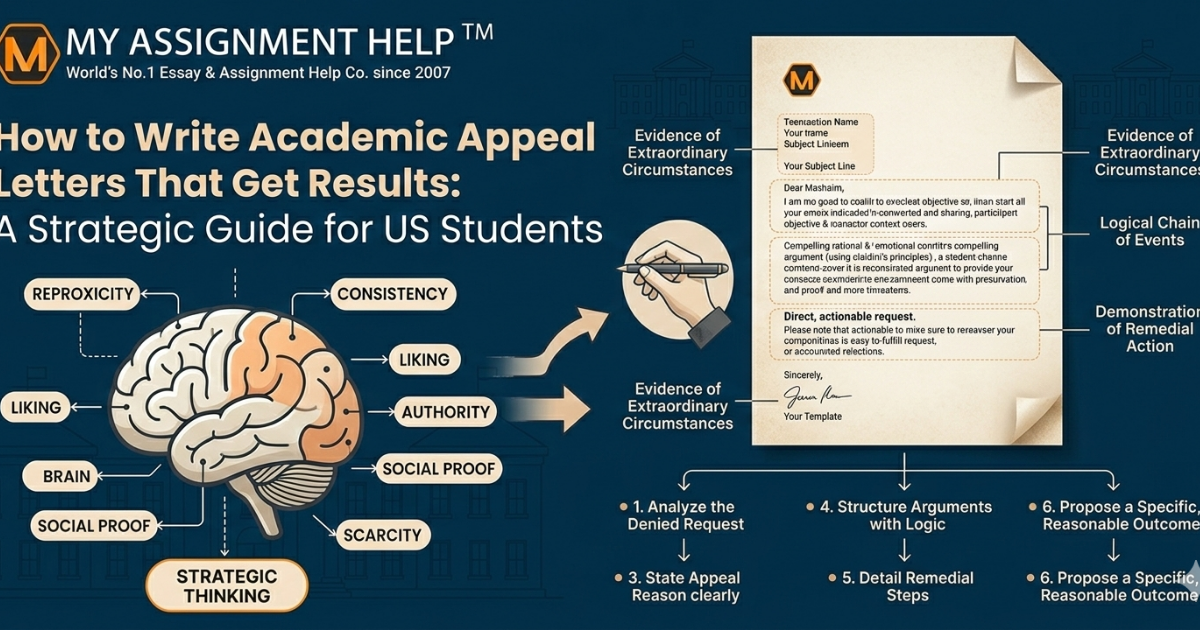
How to Write Academic Appeal Letters That Get Results: A Strategic Guide for US Students
- Education
- Zeeshan Shaukat
- 2026-03-03 14:10:12
- 565346
Receiving a disappointing academic decision—whether it’s a grade you feel is unjust, a financial aid denial, or a notice of academic probation—can feel like a roadblock to your future. However, in the American higher education system, the "appeal" is a formal due process designed to ensure fairness. An academic appeal letter is not a complaint; it is a strategic document that provides new evidence or highlights procedural errors to request a reconsideration of a decision.
According to the National Center for Education Statistics (NCES), student retention and successful degree completion are top priorities for US institutions. Universities generally prefer to see students succeed rather than dismiss them, provided the student can demonstrate a clear path forward. To turn a "No" into a "Yes," your letter must be objective, evidence-based, and professionally structured.
Understanding the "Grounds" for an Appeal
Before you put pen to paper, you must identify your legal or institutional "grounds." Most US universities, from state colleges to Ivy League institutions, will not grant an appeal simply because a student is unhappy. Valid grounds typically include:
- Procedural Errors: The university did not follow its own published handbook or syllabus rules.
- Extenuating Circumstances: Sudden illness, a death in the family, or unforeseen financial hardship (supported by documentation).
- New Evidence: Information that was not available at the time of the initial decision.
- Discrimination or Bias: Evidence that the decision was influenced by factors outside of academic performance.
Writing such a high-stakes document requires a delicate balance of humility and assertiveness. If you find yourself struggling to strike the right tone or format, seeking professional letter writing services can provide the editorial oversight needed to ensure your argument is coherent and persuasive. Expert writers understand the specific nuances that US Admissions Boards and Academic Committees look for, helping you avoid common emotional pitfalls that often lead to rejected appeals.
The Anatomy of a Successful Appeal Letter
A well-structured appeal follows a specific logical flow. In the US, the "Standard Business Letter" format is the expected professional norm.
1. The Heading and Salutation
Address the letter to a specific person—usually the Dean of Students or the Chairperson of the Appeals Committee. Avoid "To Whom It May Concern," as it suggests a lack of research.
2. The Statement of Purpose
State clearly in the first paragraph why you are writing. Example: "I am writing to formally appeal the decision regarding my academic dismissal for the Fall 2025 semester."
3. The "What Happened" (Without Excuses)
Explain the situation clearly. If your grades slipped due to a medical issue, state it plainly. This is where you connect your narrative to the concepts of accountability. Interestingly, the logic used here is similar to that of a professional claim; understanding how to write a claim letter can help you master the art of stating a grievance while maintaining a professional demeanor and focusing on a resolution.
4. Evidence and Documentation
Attach doctor’s notes, death certificates, or legal documents. In the US academic system, "claims without proof" are rarely upheld.
5. The Action Plan
This is the most critical part for US committees. They want to know: If we let you back in, how will things be different? List specific steps, such as "attending mandatory tutoring at the campus writing center" or "reducing work hours to 10 per week."
Data-Driven Insights: Why Appeals Fail
Research into student advocacy suggests that nearly 40% of initial appeals are rejected due to "lack of specificity" or "failure to provide a concrete plan for improvement." According to a report by the Journal of Student Affairs Research and Practice, committees look for internal locus of control—the student's ability to take responsibility for their situation rather than blaming professors or the institution.
Key Takeaways for a Winning Letter
- Be Concise: Keep the letter to 1–1.5 pages.
- Tone Matters: Remain polite and professional. Anger or entitlement will result in an immediate denial.
- Evidence is King: Never make a claim about your health or personal life without a supporting document.
- Focus on the Future: Spend more time on your "Success Plan" than on the "Problem."
FAQ Section
Q: How long do I have to file an appeal?
A: Most US universities have a strict window, often 5 to 10 business days after the initial decision is rendered. Check your student handbook immediately.
Q: Can I appeal a grade just because I think it’s unfair?
A: Usually, no. You must prove the grade was calculated incorrectly or that the professor deviated from the syllabus.
Q: Should I have my parents write the letter for me?
A: Absolutely not. US universities view students as adults. A letter from a parent suggests a lack of maturity and responsibility.
Q: Does a professional service help?
A: Yes, professional editors ensure your tone is objective and that you have addressed all university requirements, which significantly increases the likelihood of a positive outcome.
Author Bio: Dr. Aris Thorne
Senior Academic Strategist at MyAssignmentHelp Dr. Aris Thorne holds a PhD in Educational Leadership and has over 12 years of experience in US higher education administration. Having sat on multiple Academic Review Boards, Aris specializes in helping students navigate complex university policies and craft persuasive correspondence that adheres to institutional E-E-A-T standards. His work focuses on empowering students to regain their academic standing through strategic communication.
References
- National Center for Education Statistics (NCES). (2024). Undergraduate Retention and Graduation Rates.
- Council for the Advancement of Standards in Higher Education (CAS). (2023). Academic Advising Programs Standards.
- Journal of Student Affairs Research and Practice. (2025). The Impact of Self-Advocacy on Student Success.
534 people like this
















About Premium Author
This post has been authored and published by one of our premium contributors, who are experts in their fields. They bring high-quality, well-researched content that adds significant value to our platform.