
Barcode for Cosmetic Products UPC & EAN for Beauty Brands
- Fashion
- Talha Blogger
- 2026-03-10 00:15:54
- 565376
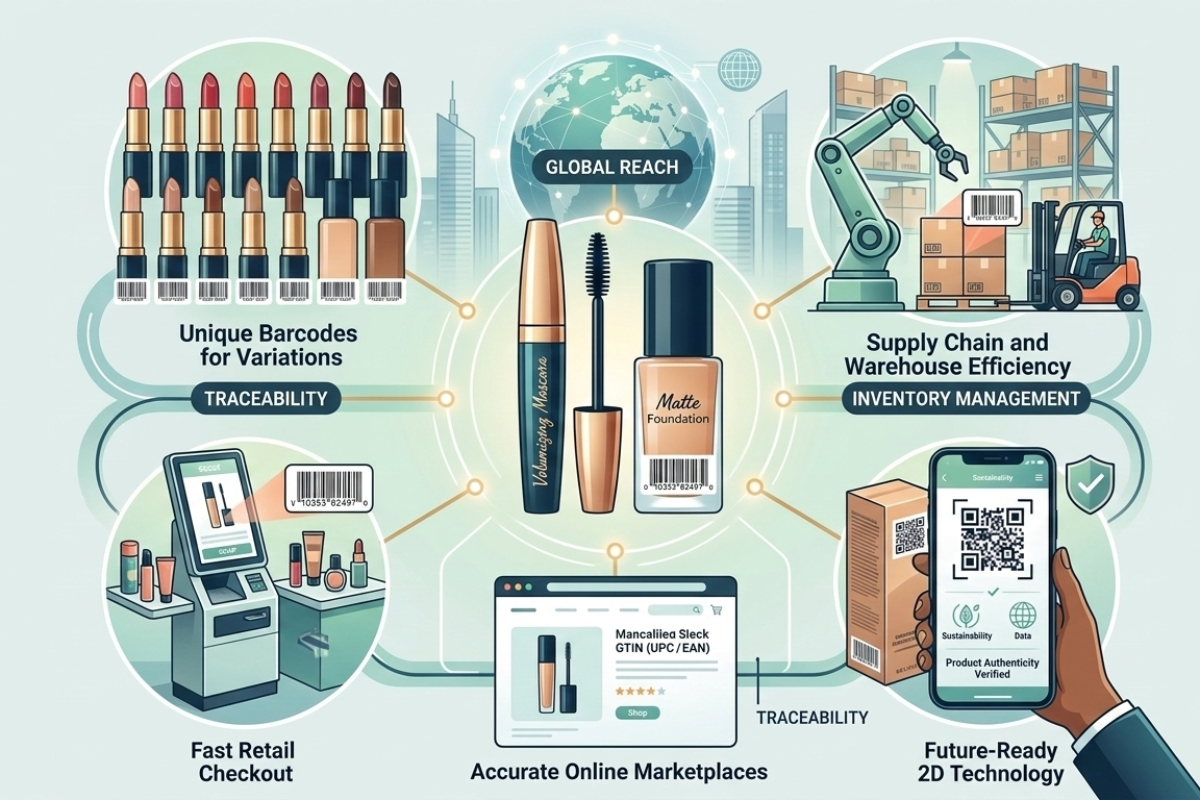
The cosmetics industry is one of the fastest-growing retail sectors, with thousands of new products launching every year. To manage this large variety of items, retailers and online marketplaces rely on standardized product identification systems. A barcode for cosmetic products allows each item to be uniquely identified, scanned, and tracked throughout the retail and supply chain process.
From lipstick and foundation to skincare and beauty kits, barcodes ensure that cosmetic products can be easily recognized by retail scanners, warehouse systems, and e-commerce platforms. For beauty brands planning to sell in retail stores or online marketplaces, implementing barcodes is an essential step toward professional product distribution.
Why Cosmetic Products Need Barcodes
Barcodes are widely used in retail environments because they simplify product identification and inventory tracking. In the cosmetics sector, where brands release multiple shades and product variations, barcodes help maintain organized product databases.
Retailers and marketplaces use barcode systems to:
- Identify products quickly at checkout
- Track inventory across warehouses and stores
- Organize product catalogs
- Prevent duplicate or incorrect product listings
Without proper product identifiers, cosmetic brands may face difficulties listing products on retail platforms or managing inventory efficiently.
Common Barcode Types Used for Cosmetics
Several barcode formats are commonly used for cosmetic products depending on where the products are sold.
UPC Barcodes
UPC (Universal Product Code) is the most widely used barcode format in North America. It is commonly printed on retail cosmetic packaging and used by supermarkets, beauty stores, and online marketplaces.
EAN Barcodes
EAN (European Article Number) is a 13-digit barcode format used internationally. It is widely accepted by retailers across Europe, Asia, and many global marketplaces.
Both barcode formats encode a unique GTIN (Global Trade Item Number) that identifies a specific product.
Barcode Requirements for Cosmetic Variations
Cosmetic brands often release many variations of the same product. Each variation must have its own unique barcode identifier.
Examples of cosmetic variations include:
- Different lipstick shades
- Multiple foundation tones
- Various packaging sizes
- Limited edition cosmetic sets
Assigning a separate barcode to each variation helps retailers manage inventory accurately and prevents product listing errors.
Where Barcodes Are Placed on Cosmetic Packaging
Because cosmetic packaging is often small, barcode placement must be carefully planned. The barcode must remain visible and easy for scanners to read.
Common placement areas include:
- Bottom of product containers
- Back of cosmetic packaging boxes
- Product label panels
- Packaging sleeves or outer cartons
High-quality printing and clear contrast are important to ensure reliable barcode scanning.
How Barcodes Improve Cosmetic Supply Chains
Barcode technology helps beauty brands manage products from manufacturing to retail shelves. When products move through warehouses or distribution centers, barcode scanning systems record product movement automatically.
This improves:
- Inventory accuracy
- Warehouse efficiency
- Retail checkout speed
- Product tracking across supply chains
For growing beauty brands, barcode systems provide a scalable way to manage product distribution.
Selling Cosmetic Products on Online Marketplaces
E-commerce platforms rely heavily on standardized product identifiers. When cosmetic brands create product listings, they often need to provide a barcode identifier such as a UPC or EAN.
These identifiers help marketplaces:
- Verify product listings
- Maintain structured product catalogs
- Prevent duplicate product entries
- Improve product search accuracy
For brands planning to sell cosmetics online, having proper barcode identifiers helps streamline the listing process.
Future Trends in Cosmetic Product Identification
The retail industry is gradually moving toward more advanced barcode technologies. New 2D barcode systems are being introduced that can store larger amounts of product information.
These advanced barcodes may allow customers to scan cosmetic packaging using smartphones to access details such as:
- Ingredient lists
- Product authenticity verification
- Sustainability information
- Usage instructions
These developments show how barcode technology is evolving beyond simple product identification.
Conclusion
A barcode for cosmetic products is an essential tool for modern beauty brands. It ensures that products can be identified, scanned, and managed efficiently across retail stores, warehouses, and online marketplaces.
By implementing standardized barcode systems and assigning unique identifiers to each product variation, cosmetic brands can improve inventory management, streamline retail operations, and expand their presence in the competitive beauty market.
537 people like this











About Premium Author
This post has been authored and published by one of our premium contributors, who are experts in their fields. They bring high-quality, well-researched content that adds significant value to our platform.